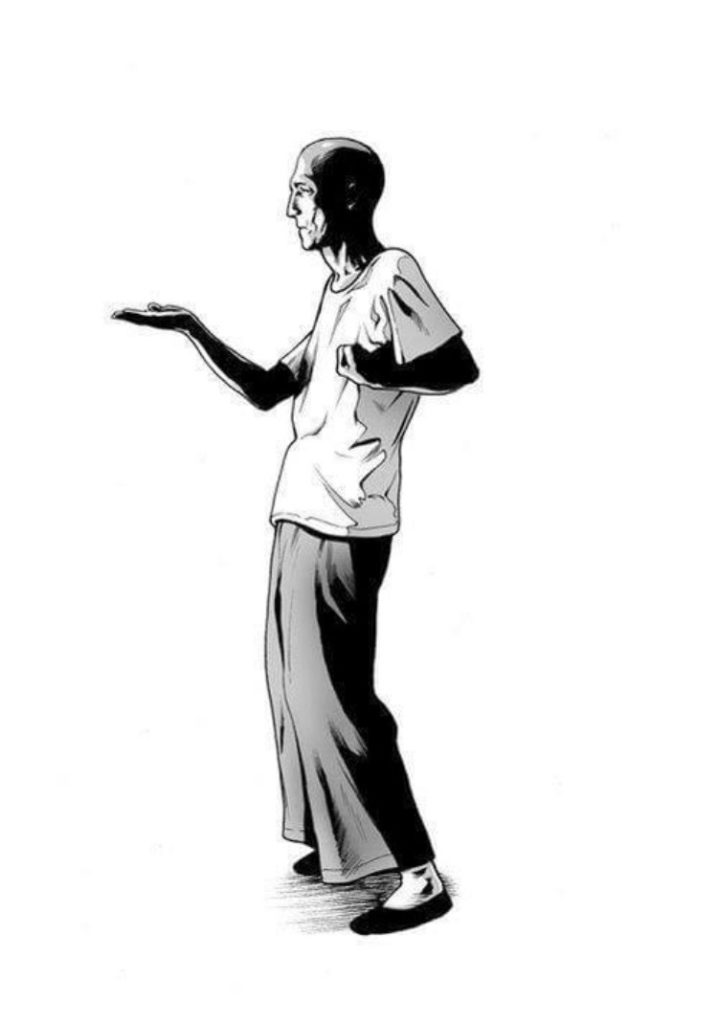
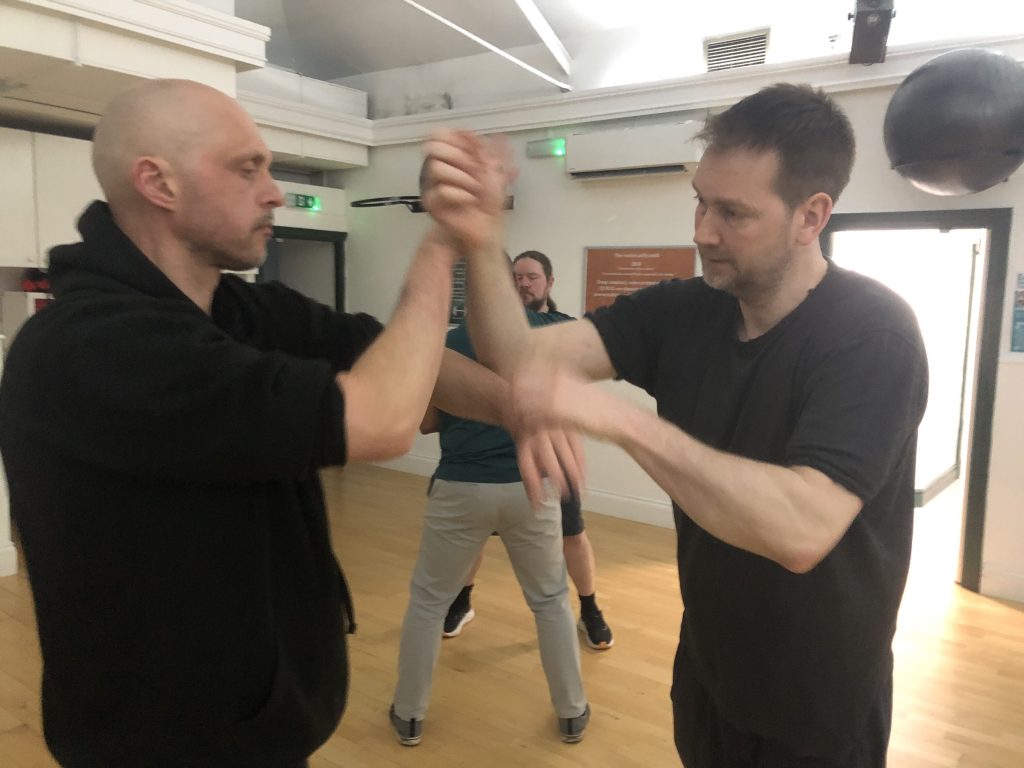
If you’re looking for Chi Sau for beginners this one’s for you! Chi Sau, or sticky hands practice is a Wing Chun training drill. Two practitioners stand facing each other and link arms. Each has a number of basic positions they move between in order to build up an understanding of defence and attack. Basic positions can be seen below – Tan Sau, Bong Sau and two Fook Sau positions.
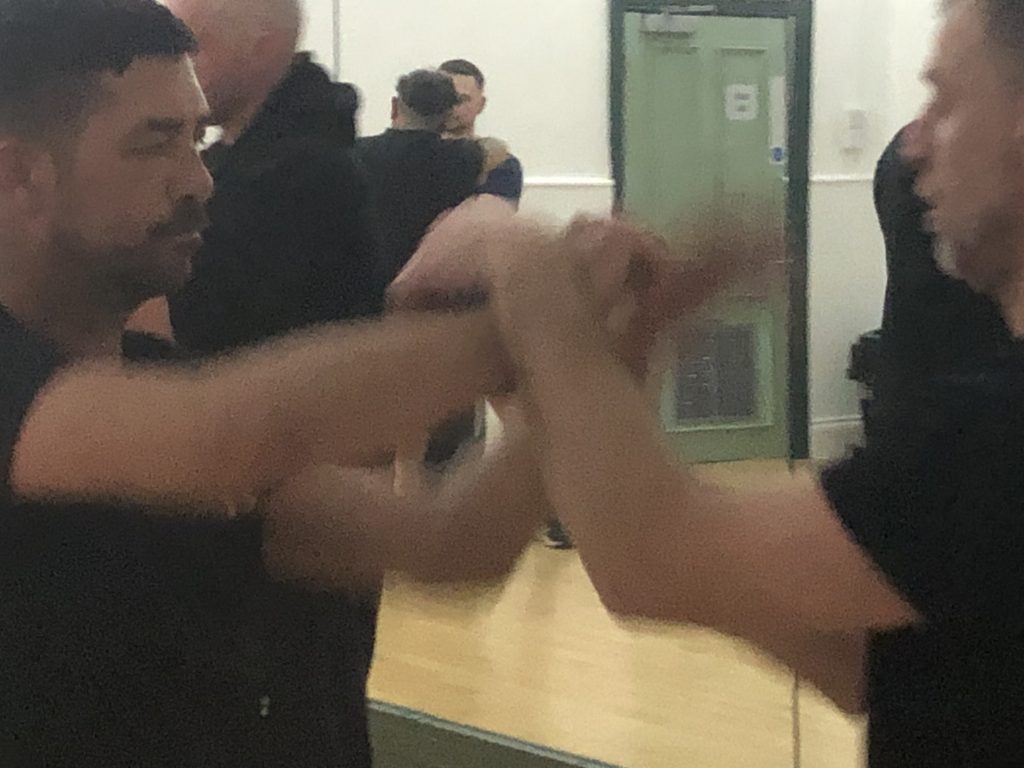
Initially, beginners are taught a basic rolling position. This is where they can link up in a relaxed manner with their partner, without much force between the arms.
Once the basic positions have been learned, you can begin attacking the arms to create openings to punch down the centreline and attack towards your partner.
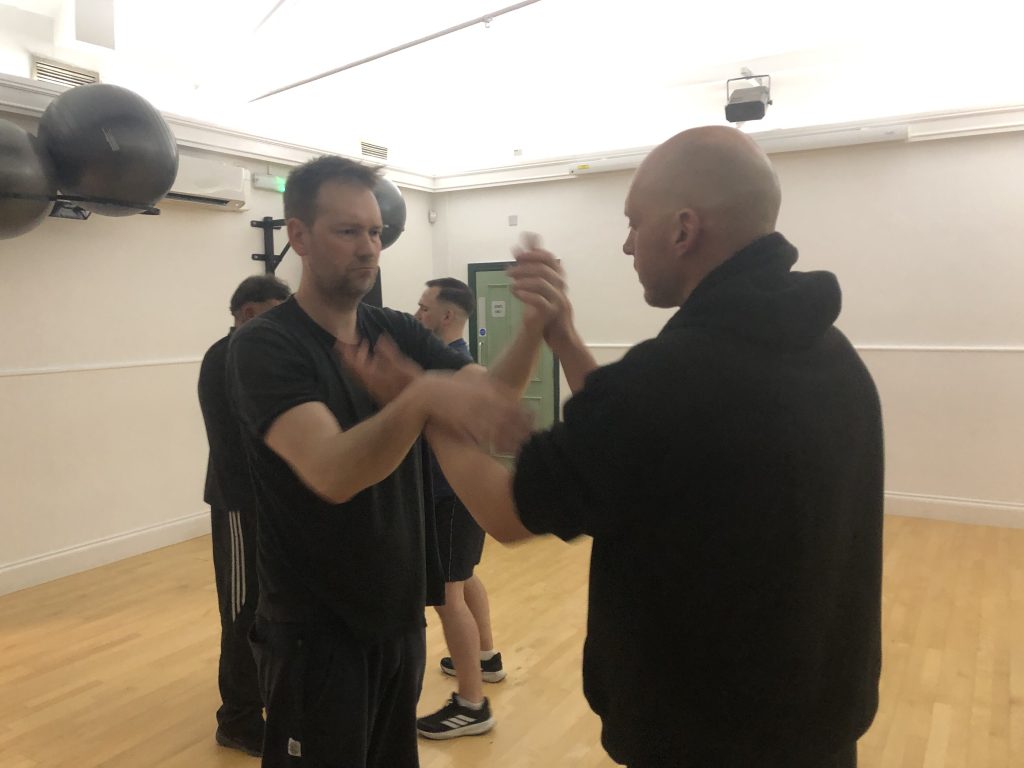
Chi Sau For Beginners – Next Step
Once both parties can roll between the four main positions without using much force, we can add some forward intention. This shouldn’t be a pushing force, but a more subtle “idea” of thinking forwards towards your partners centreline. So when a gap opens up, the fist automatically fires forwards down the attacking line.
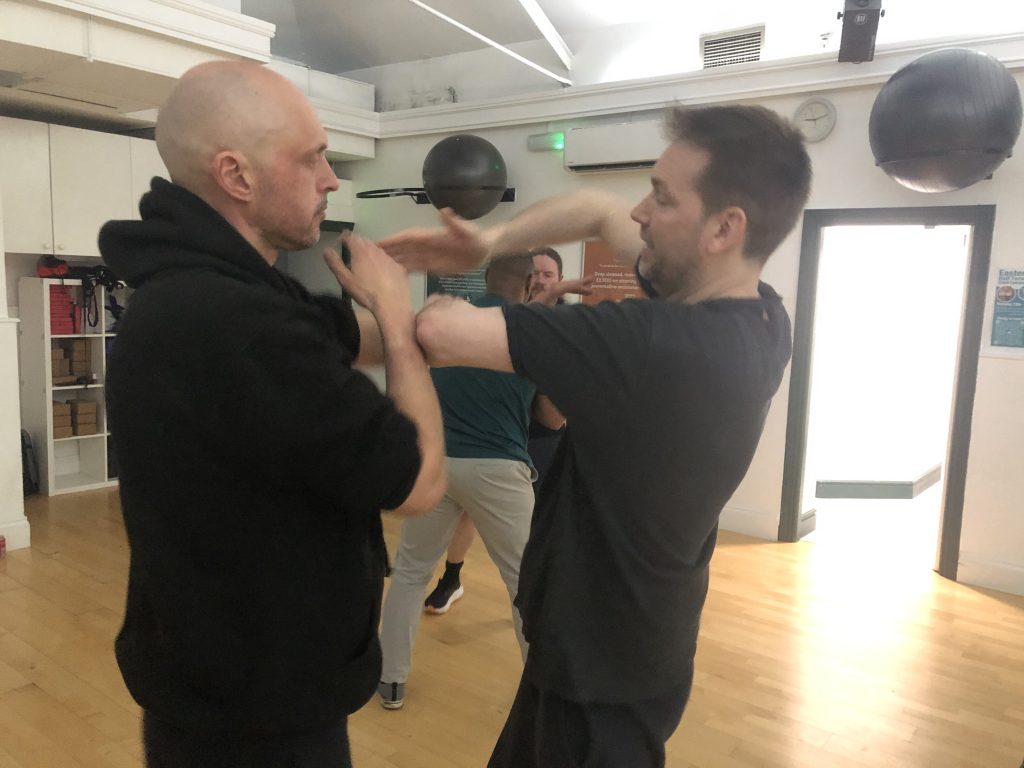
As practitioners get more experienced with chi sau, we can add turns, attacks to the balance and attacks to the centreline. The key being to control your partners arms and land a hit or destabilise your partner without losing control of your own centreline and conceding a hit. As you build up your knowledge of chi sau, you’ll begin to understand attacking lines and how to defence the centreline.
Staying Relaxed Mentally
The key to learning good chi sau is to stay relaxed mentally. This is a massive key and at an Ip Chun seminar in the 90’s I asked this specific question: “what’s the best way to learn good chi sau?”. Ip Chun’s answer (through a translator) was to relax mentally.
However, as much as you should stay relaxed mentally in chi sau, this isn’t always easy. Particularly when someone is trying to hit you! Often beginners tense up in chi sau, and the game becomes a wrestle of strength. This is why Ip Man used to say beginners should never use strength.
Once you can play chi sau in a relaxed manner, without getting mentally tense, you can experiment with more complex manoeuvres. Staying relaxed also means you understand when to use tension (energy) or not. In the beginning phase of learning chi sau this is particularly important.
Chi Sau And First Form – Siu Lim Tao
Siu Lim Tao, the first hand pattern of Wing Chun, teaches us a number of important principles which can be carried into our Chi Sau game. By regular practice of the first form we learn:
- To relax mentally – the perfect state to learn and play chi sau in
- Centreline principles – maintaining focus down the centreline
- Perfect positions – for defence
- Arm/body connection – moving as a whole, not just in parts
- Physical relaxation of the muscles while moving
So although the first form doesn’t look like much to the beginner, it carries a lot of Wing Chun’s main principles. By regularly practicing the first form (with the right knowledge), you’re embedding these ideas into your subconscious mind, so they appear in your Chi Sau game. Playing Chi Sau with someone who practices first form regularly you should find they have a calm mind and good control of the centreline. The first form implants the right structure and mindset for chi sau.
Summary
Chi Sau is an excellent way to learn how to fight through using a physical “game” where both students link arms and attempt to strike/unbalance each other without losing control of their partners arms. The key to learn good Chi Sau is through relaxing mentally and staying in a relaxed state throughout the practice. When your mind tenses up, so does your body and this makes you less efficient and sensitive to your partners movements.
More about Chi Sau in this post.
More about Wing Chun here.