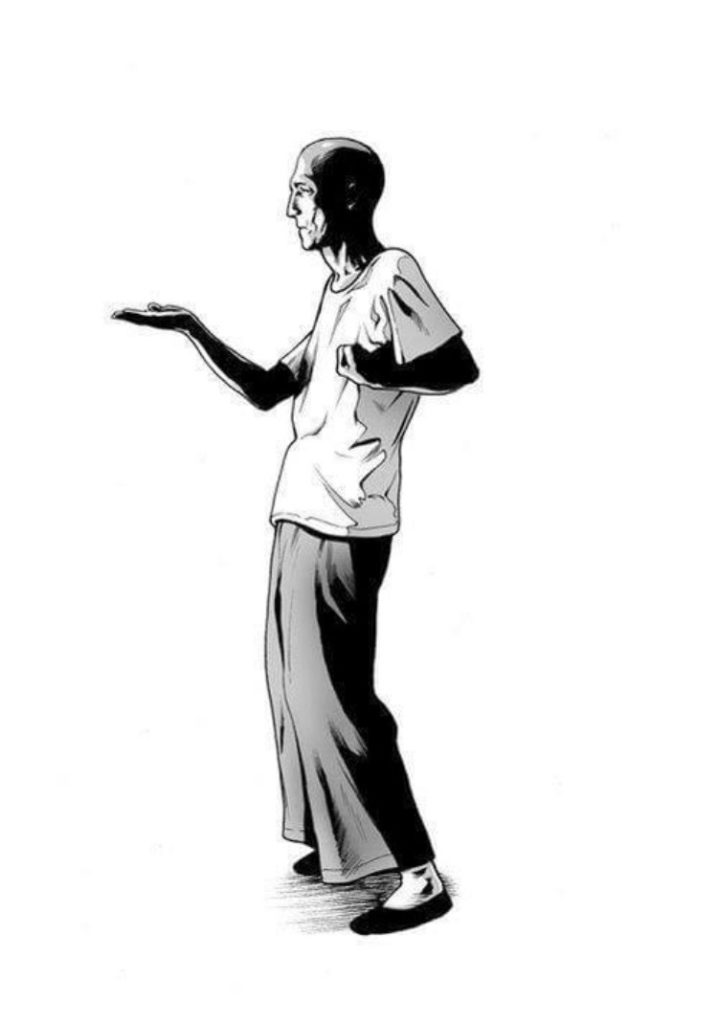
If you’re looking for self defence classes in Leeds, you will want to know why you are training in a particular style.
Every style of martial art has something to offer and all have a slightly different context. A great book on this topic is Meditations On Violence by Rory Miller. In his book he outlines some of the contexts of various martial arts.
For example, BJJ (Brazilian Ju Jitsu) excels on the ground. Many BJJ practitioners do well in MMA tournaments because they simple go to the ground where they out-perform others. This is great in the context of self defence one on one. But what if there are more than one attackers? What if a punch is thrown?
Wing Chun, on the other hand is a self defence system for standing upright. What Wing Chun lacks on the ground it makes up for in the context of standing fighting at close range.
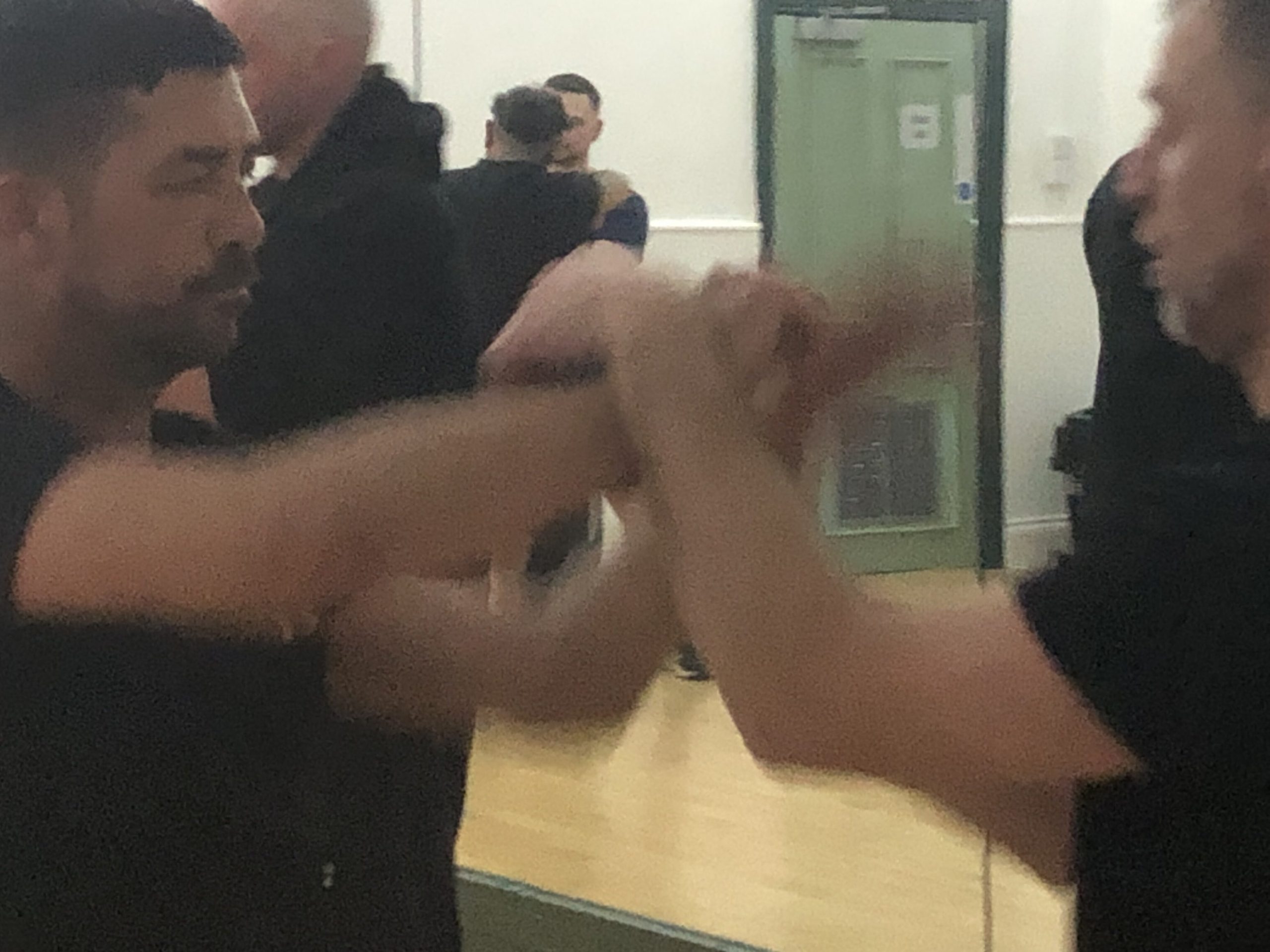
Self Defence Styles & Context
Another example of context is Aikido. Aikido is a martial art which is based on the Samurai where sword play was the norm. As such, the context varies from both Wing Chun and BJJ. In Aikido, you work with a partner to develop movements to bring your opponent to the ground.
Aikido has locks, pins and holds. It is used by security services and police because it is a self defence system which can incapacitate an attacker, without doing the maximum damage.
By comparison, Wing Chun is more focused on simplicity and strikes are its focus, rather than controlling someone to the ground.
But in the context of Aikido, your attacker potentially has a weapon. So controlling the weapon in the attack becomes the priority, rather than body blows.
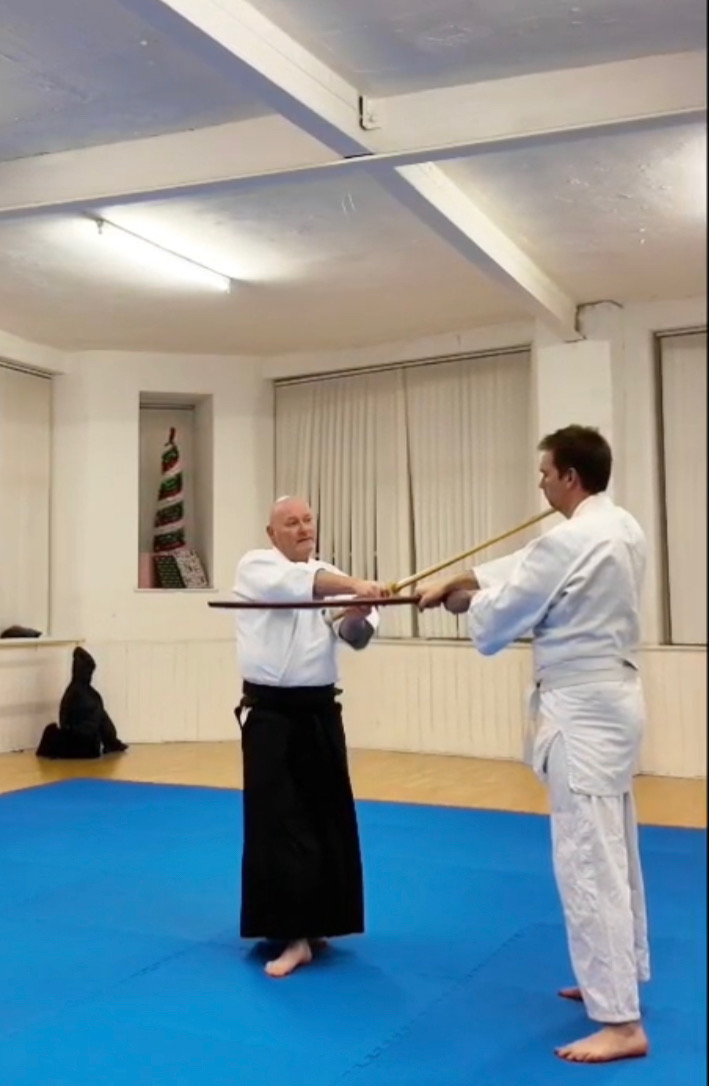
Styles Of Self Defence
Kali is another example of a self defence system which is designed for weapons. While weapons are part of the Kali system, the same principles can also be used empty handed. Kali is a Filipino style of martial art.
Again, Kali is not designed for the ground, but more as a standing and fighting system – a battle front combat style where life is on the line and it is definitely not a sport. Again, like Aikido, the priority is to control the weapon arm, rather than strike the body – since this presents more danger.
A body strike might be a mistake if someone has a weapon, since the weapon can likely kill, and a strike might not neutralise the threat.

Self Defence And Sport Martial Arts
Some styles of martial arts have become more sport oriented. There’s even a style within Aikido which is more geared to sport – Tamiki Aikido which has less of the traditional emphasis. Taekwondo, and Karate, Judo and Kickboxing are often geared for competition too.
Judo in particular is well geared for competition and has strict rules. Originally from Jujitsu, Judo has originally has more devastating attacks within it such as choke holds which are removed for sport.
Summary
There’s a whole host of martial arts for self defence. It’s worth looking into your reasoning for learning a self defence system so you can zone in on a martial art which is most suitable. Are you looking for something to give you confidence should a situation arise? Or is it purely fitness you want from a style?
If you’re concerned about a street attack, you might want to look at the arts which support the context with which you want to arm yourself against an attack.
Some martial arts are designed specifically for the context with which they are designed. Wing Chun for example, is very good for close quarter combat. It prioritises straight line attacks and has low kicks. It is designed to end a fight very quickly using the least amount of effort.
For more on a our classes see our self defence classes in Leeds page here.